

Building the ACES II Ejection Seat
In an F-16 cockpit, one piece immediately stands out: the ACES II ejection seat. It’s an iconic element, not only for its look, but also because it defines the ergonomics and unique posture of the Viper pilot. Reproducing this seat at home was both a challenge and a milestone in my pit-building journey.
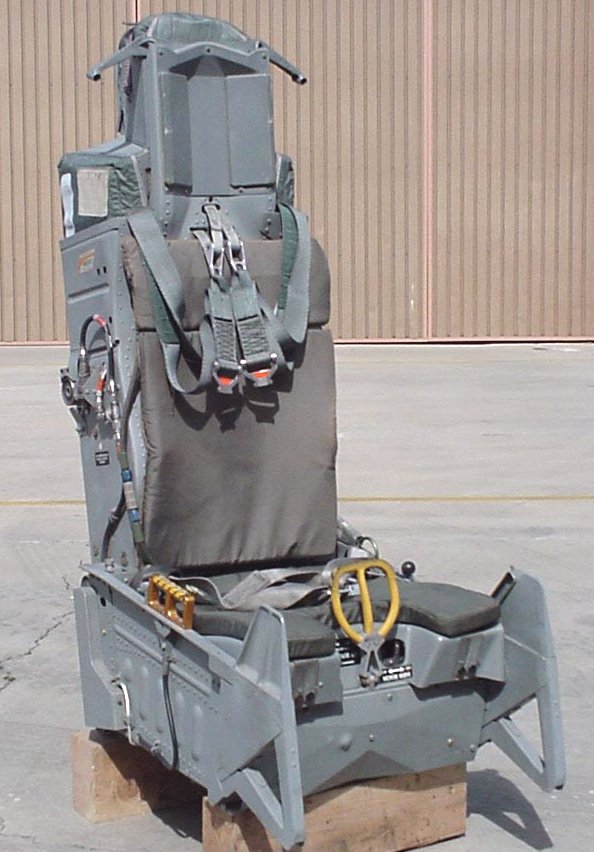
The Real ACES II Seat
The F-16 is equipped with the ACES II (Advanced Concept Ejection Seat II), designed by McDonnell Douglas (now Collins Aerospace). Entering service in the early 1980s, it is also found in the A-10, F-15, F-22, and even the B-1 bomber.
One of its most distinctive features is the 30° reclined seatback angle, specific to the F-16, which improves pilot tolerance to high g-forces. This laid-back posture has become a hallmark of the Viper. With thousands of successful ejections, the ACES II has earned a reputation as one of the most reliable ejection seats in the world.
👉 Fun fact: The survival rate of the ACES II is among the highest of any ejection seat ever produced.
Its main components include:
- the survival kit stored in the seat pan,
- the chute box located behind the pilot’s head and housing the parachute,
- the inertia reel managing the shoulder harness,
- and of course, the yellow-and-black striped ejection handles, instantly recognizable.
My Reproduction
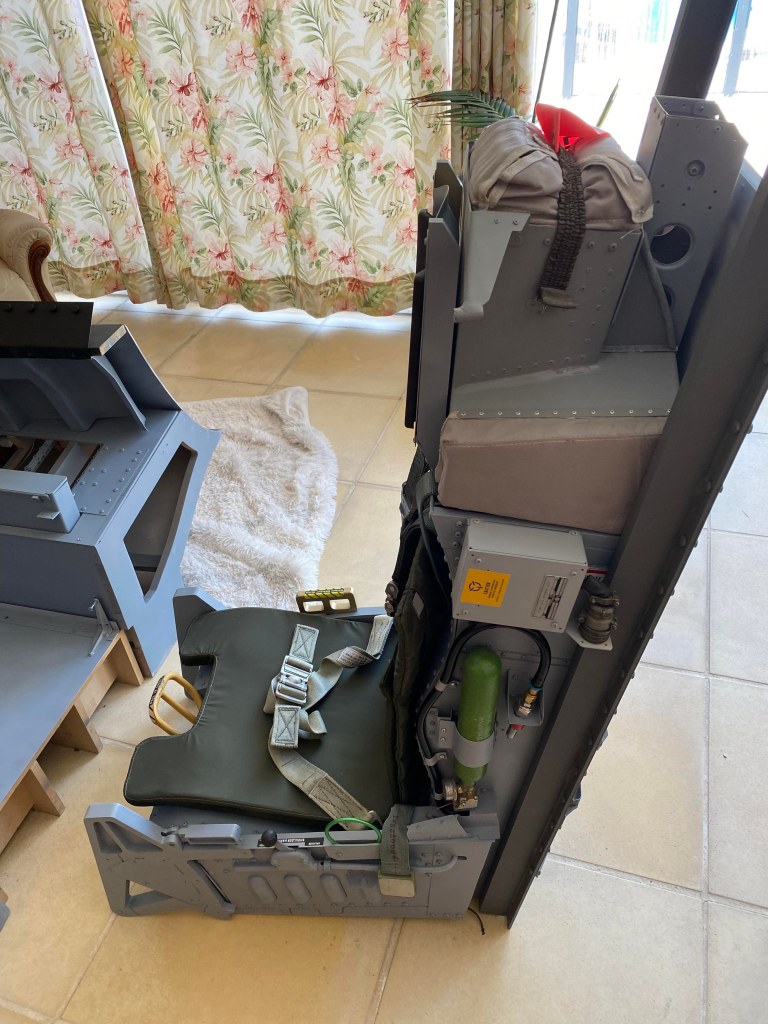
For my cockpit, I relied on Teejay Beauparlant’s DXF plans, which introduced me to the world of vector drawing and 3D design. The structure is built from MDF, reinforced with steel parts, and divided into three main sections:
- the seat pan,
- the seat back,
- and the chute box.
To push the realism further, I managed to source an authentic ACES II harness, connected to an inertia reel mounted in the seat back. I also acquired a few original accessories: a real ejection handle and a retired O₂ bottle. These details instantly bring the seat to life.
Details and Finishing Touches
Some components were crafted from aluminum, folded almost like origami. It was tricky at first, but with a few tips, the process became easier. I also added bolts and rivets, carefully placed using reference photos of the real seat.
3D-Printed Parts
More complex parts, like the seat arming handle, were made using 3D printing. This handle is fitted with its own functional switch. Similarly, the ejection handle is mounted on a high-tension spring, with a switch wired to signal activation inside the simulator.
👉 Fun fact: In the real F-16, pulling the ejection handle triggers a chain of pyrotechnic and pneumatic events in less than half a second.
Pneumatic Details
I also reproduced part of the pneumatic circuit, using second-hand Swagelok fittings that I was lucky to find. This small detail adds another layer of authenticity to the build, giving the seat a more technical, mechanical feel.
The Rails
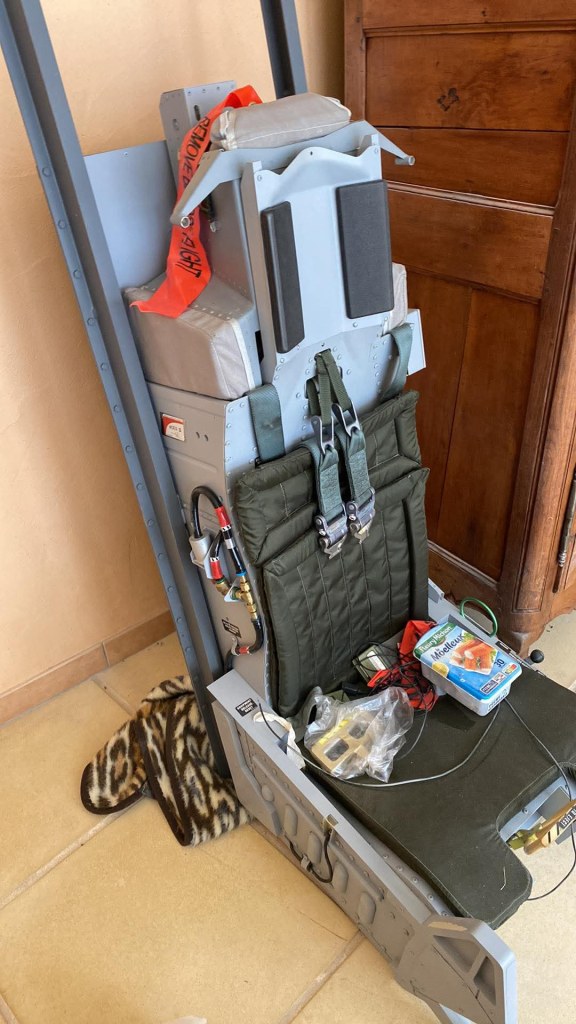
The seat itself is mounted on steel rails, just like in the real aircraft, guiding the seat during the ejection sequence. These rails were built from lightweight steel and welded by a friend. Welding is a skill I hope to master in the future, as it opens up new possibilities for pit building.
Upholstery and Cushions
And of course, the seat wouldn’t be complete without cushions and upholstery. The seat cushions were handmade by my wife, who also sewed the fabric parts of the headrest. This not only brought the seat to life but also gave it a personal touch that makes it even more special.
Painting and Finish
For the finishing, I applied wood sealer (fondur) to the MDF to close its pores. Once dry, the entire structure was painted in the authentic gray color of the ACES II, using a two-component paint for durability.
👉 Tip: Sealing MDF before painting not only improves the finish but also makes the structure more durable over time.
Taking a Seat
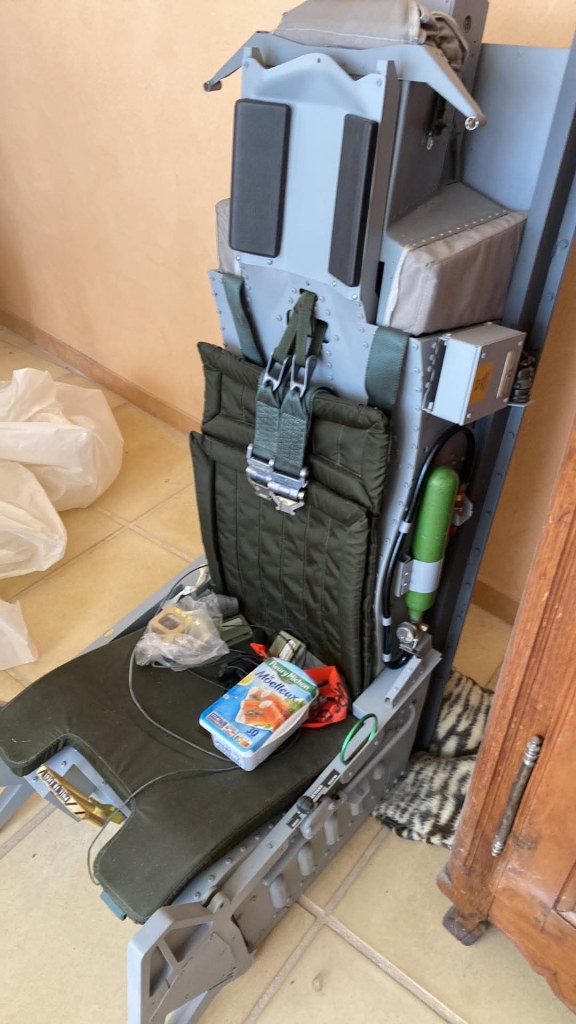
Strapping into this seat with a real harness, feeling the resistance of the ejection handle, noticing the Swagelok fittings on the side, and sitting on custom-made cushions is an experience like no other. With the rails supporting it just as in the real aircraft, the immersion is complete.
Installing the ACES II completely changes the atmosphere: you’re no longer “sitting at a desk with a joystick”—you’re truly strapping into the cockpit of an F-16.
 The Viper Garage
Laisser un commentaire